
Sun Exposure and Premature Aging: Why Your Skin Can Look Older Than Your Age
Before we move through the decades in our Your Skin, Decade by Decade series, it is important to understand one of the biggest influences on how skin ages: sun exposure.
Some skin changes happen simply because we get older. Others happen faster because of years of ultraviolet, or UV, exposure. Dermatologists often call this photoaging.
At Peak Skin Center in Fuquay-Varina, NC, we see the effects of sun exposure every day. Brown spots, redness, rough texture, fine lines, deeper wrinkles, and loss of firmness can all be made worse by cumulative UV damage.
What Is Photoaging?
Photoaging is premature skin aging caused by repeated exposure to ultraviolet radiation from the sun and tanning beds.
Unlike normal aging, which happens gradually throughout the body, photoaging is most noticeable on areas that receive the most sun, including the face, neck, chest, forearms and hands.
This is why the skin on the chest or backs of the hands may sometimes look older than skin that has been protected from the sun.
How Does the Sun Age the Skin?
UV radiation does more than cause a sunburn.
Over time, it can damage collagen and elastin in the dermis, the deeper layer of skin that provides strength and support.
As these structures break down, the skin may become:
- Thinner
- Less firm
- Less elastic
- More wrinkled
- More uneven in color
- Rougher in texture
Sun exposure can also create changes in pigment and blood vessels, which is why photoaged skin may develop freckles, brown spots, blotchy color, redness, and visible capillaries.
Sun Damage Builds Slowly
One of the tricky things about sun damage is that much of it happens before you can see it.
A tan may fade, but the effects of repeated UV exposure can continue to build over many years.
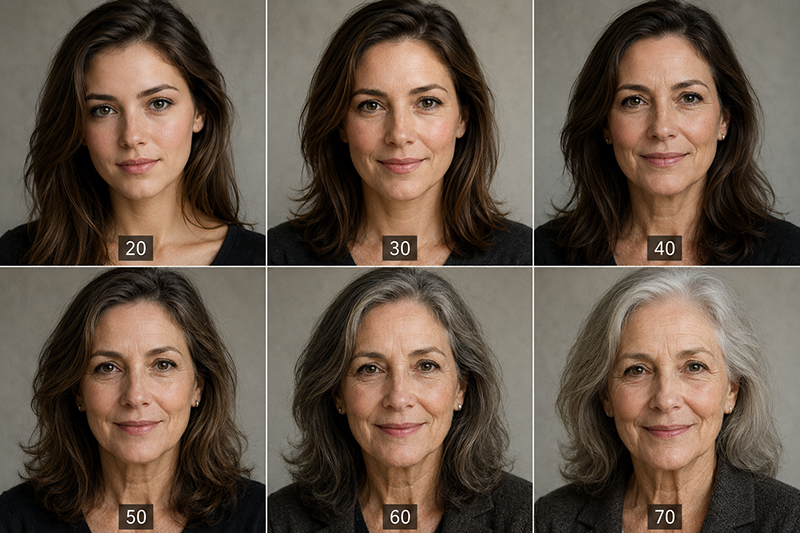
In your 20s, the skin may still look smooth and even. By your 30s and 40s, freckles and uneven pigmentation may become more noticeable. In later decades, collagen loss, rough texture, deeper wrinkles, and more visible sun damage may appear.
This is one reason prevention matters even when your skin still looks healthy.
Tanning Beds Count Too
Indoor tanning can accelerate many of the same changes caused by natural sunlight.
Tanning beds expose the skin to concentrated ultraviolet radiation and can contribute to premature aging as well as an increased risk of skin cancer.
If the goal is to keep skin looking healthy over time, avoiding tanning beds is one of the simplest things you can do.
Can Sun Damage Be Improved?
Yes.
The best treatment depends on what type of sun damage is present.
For superficial brown spots, freckles, and uneven pigmentation, treatments such as Fraxel 1927 nm, chemical peels, and targeted skin care may help.
For redness and visible blood vessels, Excel V can be useful.
For deeper texture changes, wrinkles, and collagen loss, treatments that stimulate remodeling, including Fraxel 1550 nm or CO2 laser resurfacing, may be considered.
The most effective plan often combines treatment with ongoing sun protection so new damage does not continue to accumulate.
Sunscreen Is Still the Best Anti-Aging Product
If there is one product that matters in every decade, it is sunscreen.
Daily use of a broad-spectrum sunscreen with at least SPF 30 can help reduce additional UV damage and protect the collagen and pigment changes you are trying to improve.
Other helpful habits include wearing hats, seeking shade, avoiding peak sun when possible, and protecting the chest and hands rather than focusing only on the face.
“Aging is unavoidable, but a large part of what people think of as ‘old-looking skin’ is actually accumulated sun damage,” says Thomas Knackstedt, MD, board-certified dermatologist at Peak Skin Center. “Protecting your skin early can make a meaningful difference in how it looks decades later.”
Your Skin, Decade by Decade
Sun exposure affects every stage of skin aging, but the visible changes look different in your 20s than they do in your 50s or 70s.
In our Your Skin, Decade by Decade series, we will look at how skin changes over time and which cosmetic treatments may be most useful at each stage.
At Peak Skin Center, we offer cosmetic dermatology for patients in Fuquay-Varina, Holly Springs, Apex, Cary, Raleigh, and surrounding areas, including skin care, chemical peels, BelaMD facials, Fraxel, Excel V, neuromodulators, fillers, and CO2 laser resurfacing.
The goal is not to stop aging. It is to understand what is happening in the skin, protect it from preventable damage, and choose treatments that fit your goals.
At a Glance
Dr. Thomas Knackstedt
- Double board certified in dermatology and Mohs Surgery
- Over ten years of experience providing evidence-based care
- Nationally renowned physician leader with numerous publications, lectures, and academic affiliations
- Learn more
